



Be the first one to receive latest updates.
Follow Us
+923116528248
Khairpur, Mir's, Sindh, Pakistan,


Ending Child, Early and Forced Marriage Empowering Rural Youth in Sindh

Implementing Partner: IWO Sindh
Supported by: Save the Children & U.S. Department of State
Coordinated through: Strengthening Participatory Organization (SPO)
Location: Taluka Sobhodero District Khairpur, Sindh
Theme: Youth Engagement & Advocacy to End (CEFM)
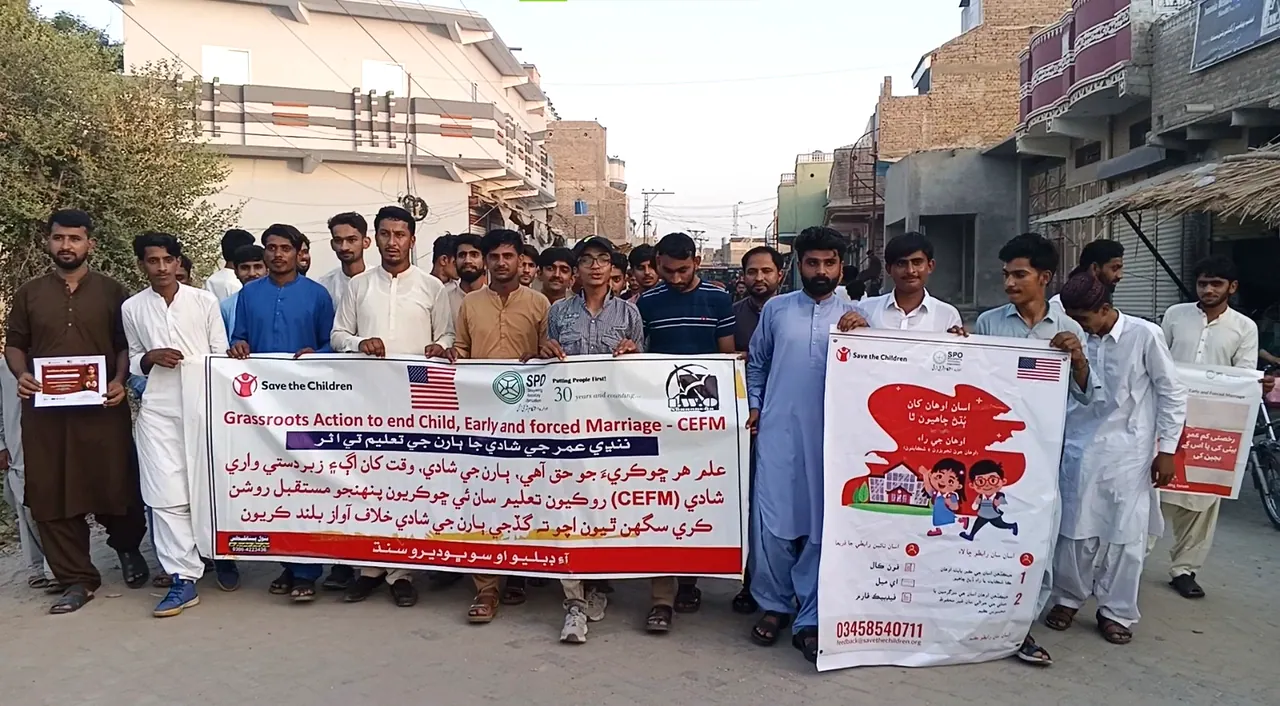
Ending Child, Early and Forced Marriage in Rural Sindh: A Youth-Led InitiativeChild Early and Forced Marriage Awareness Walk
Table of Contents
Introduction
Project Summary and Strategic Partners
Key Challenges
Core Activities
Long-Term Community Impact
Introduction to the Initiative
Child, Early and Forced Marriage remains a critical human rights and public health concern across rural Pakistan. Deep-rooted patriarchal traditions, economic hardships, and social pressures continue to jeopardize the development, safety, and well-being of young adolescents, particularly girls. Tackling this complex issue requires a dedicated grassroots approach that combines youth leadership, legal awareness, and strategic community engagement.
To address these challenges effectively, Imamia Welfare Organization (IWO Sindh) is actively leading transformative community-based projects in District Khairpur. By organizing local communities, educating youth, and strengthening institutional advocacy networks, IWO Sindh is creating a protective environment where young boys and girls can assert their fundamental rights to education, health, and dignity.
Project Summary and Strategic Partners
o eliminate harmful traditional practices, IWO Sindh is executing a targeted advocacy project across five fundamental Union Councils of Taluka Sobhodero, District Khairpur, UC Sobhodero, UC Pir Hayat Shah, UC Madd, UC Sagyoon, UC Sami.
This comprehensive social protection effort to end Child, Early and Forced Marriage is supported by Save the Children and the U.S. Department of State, and coordinated through Strengthening Participatory Organization (SPO).
The primary goal of this initiative is to empower adolescents and youth—especially those from marginalized and vulnerable socio-economic backgrounds—through leadership development, rights-based advocacy campaigns, and legal literacy programs. By appointing dedicated young girls and boys as Youth Champions, the project drives outreach regarding basic rights, retention in education, Sexual and Reproductive Health Rights (SRHR), and legal protections. Additionally, IWO Sindh works to strengthen inter-agency coordination through the District Learning Forum (DLF) and Provincial Learning Forum (PLF) to foster sustained policy dialogue and joint action.
Key Challenges Driving Early Unions
Rooting out social barriers in rural areas means confronting various interconnected societal structures. Based on field observations across Sobhodero, Madd, Pir Hayat Shah, Sami, and Sagyoon, IWO Sindh has identified several primary challenges.
About IWO Sindh and Official Channels
luence policies affecting their health, safety, and futures.
IWO Sindh
Dedicated to uplifting marginalized communities focusing on children, women, youth, and farmers through education, health, advocacy, and rights-based development.
Cultural Norms: Deeply ingrained patriarchal traditions that sustain early marriage practices across communities.
Economic Poverty: Severe financial strains that lead families to marry off young daughters early to lessen household expenses.
Weak Legal Enforcement: Limited local compliance and enforcement of existing child protection legislation, such as the Sindh Child Marriage Restraint Act (2013).
Education Gaps: Lack of adequate educational infrastructure and high dropout rates among adolescent girls.
Limited Youth Voice: Lack of decision-making power and agency among adolescents regarding their own health and futures.
Health Risks: Low awareness surrounding SRHR, leading to elevated health risks for young married adolescents.
Stakeholder Coordination Gaps: Insufficient interaction between civil society organizations and government authorities, limiting effective protection responses
Core Activities Against Forced Marriages
To build community resilience, IWO Sindh conducts a strategic series of field activities across all targeted Union Councils
Mobilization & Training: Recruiting and capacity-building of boy and girl Youth Champions to lead community outreach.
UC-Level Advocacy Campaigns: Conducting grassroots awareness drives led by young people across Sobhodero, Madd, Pir Hayat Shah, Sami, and Sagyoon.
Youth–Government Dialogues: Facilitating direct interface sessions between youth advocates and government stakeholders regarding legal protections and local services.
Community Workshops: Hosting legal rights workshops for parents, teachers, religious leaders, and community elders.
Digital Media Engagement: Executing online awareness campaigns using social media platforms including Facebook, WhatsApp, TikTok, and LinkedIn.
District Learning Forum Events: Organizing district-level advocacy events featuring interactive theater, educational exhibitions, and community rallies to challenge Child, Early and Forced Marriage.
Creative Youth Competitions: Engaging young people through drawing, art, and public expression contests to highlight girls’ rights and education.
IEC Dissemination: Developing and distributing informative legal and SRHR literature throughout all five project UCs
Long-Term Community and Policy Impact
By placing young advocates at the center of community action, the project achieves lasting structural changes against Child, Early and Forced Marriage.
| Impact Dimension | Strategic Long-Term Outcome |
| Youth Leadership & Empowerment | Cultivates an active cadre of informed, confident youth advocates who lead human rights education, advance gender equality, and challenge socio-cultural barriers at the grassroots level. |
| Socio-Cultural Transformation | Drives a gradual, sustainable shift in community mindsets—utilizing creative media, public dialogues, and art competitions to normalize girls’ autonomy, rights, and higher education. |
| Policy & Legislative Enforcement | Strengthens local governance and legislative accountability through active District (DLF) and Provincial Learning Forums (PLF), ensuring robust implementation of the Sindh Child Marriage Restraint Act (2013). |
| Educational & Health Retention | Increases secondary school retention rates among adolescent girls while expanding access to crucial Sexual and Reproductive Health Rights (SRHR) literacy. |
| Civil Society Synergies | Establishes multi-stakeholder collaborative networks between CSOs, government departments, and local leaders, forging an integrated protection ecosystem. |
| Scalable & Replicable Model | Demonstrates an adaptable, youth-led advocacy framework that can be seamlessly replicated across other vulnerable and marginalized districts in Pakistan. |
Key Strategic Pillars of Impact
- Breaking the Generational Cycle: Delaying early marriage directly reduces teenage maternal mortality, prevents severe reproductive health complications, and disrupts the intergenerational transmission of rural poverty.
- Institutionalizing Youth Agency: By embedding boy and girl Youth Champions directly into Union Council decision-making structures, young citizens gain a permanent platform to influence policies affecting their health, safety, and futures.
About IWO Sindh and Official Channels
Imamia Welfare Organization (IWO Sindh) remains dedicated to uplifting marginalized communities across Sindh by focusing on children, women, youth, and farmers through education, health, advocacy, and rights-based development.
Stay connected with our official platforms for real-time project updates and community news.
Visit Our Website:IWO Sindh
Digital Outreach & Strategy: Digital media campaign support and technical SEO optimization for this initiative are provided by Atta Digital.
© 2025 IWO Sindh – All Rights Reserved
Leave a Comment

Saima Hayden
Nostrud aliquip exrcitation laboris
nisiut temp duis autey. Lorem unt
ipsum sit amet elit dolor.

To work for the general welfare of the community regardless of caste, Religion, color and creed in the field of health, education & social development.
One Comment
Atta Hussain Lakho
October 4, 2025Good work Iwo sindh